
It’s a place of positivity and reassurance. For some it’s a real refuge and a place of hope.
The amazing Living Well Centre here at our hospice is where our patients can get together for mutual support over coffee and a cake, and where we can provide nursing care, practical advice and support for patients and those caring for someone with a life-limiting diagnosis.
It’s also where we offer a range of activities – art and music therapy for example – as well as professionally-led sessions designed to enhance quality of life for those living with life-limiting conditions. That includes support around well-being, strength and balance, and holistic support of symptom management. It’s all about helping people retain the best quality of life for as long as possible.
We created the Living Well Centre in 2017 to support our patients and their loved ones and carers. It’s become such a special place and represents many things to many people.
It’s a centre of excellence, and unique to the area for patients with complex life-limiting conditions. Patients can expect a high level of expertise, facilities and support to enhance their lives and the lives of their loved ones and carers. That is what the Living Well team is all about.
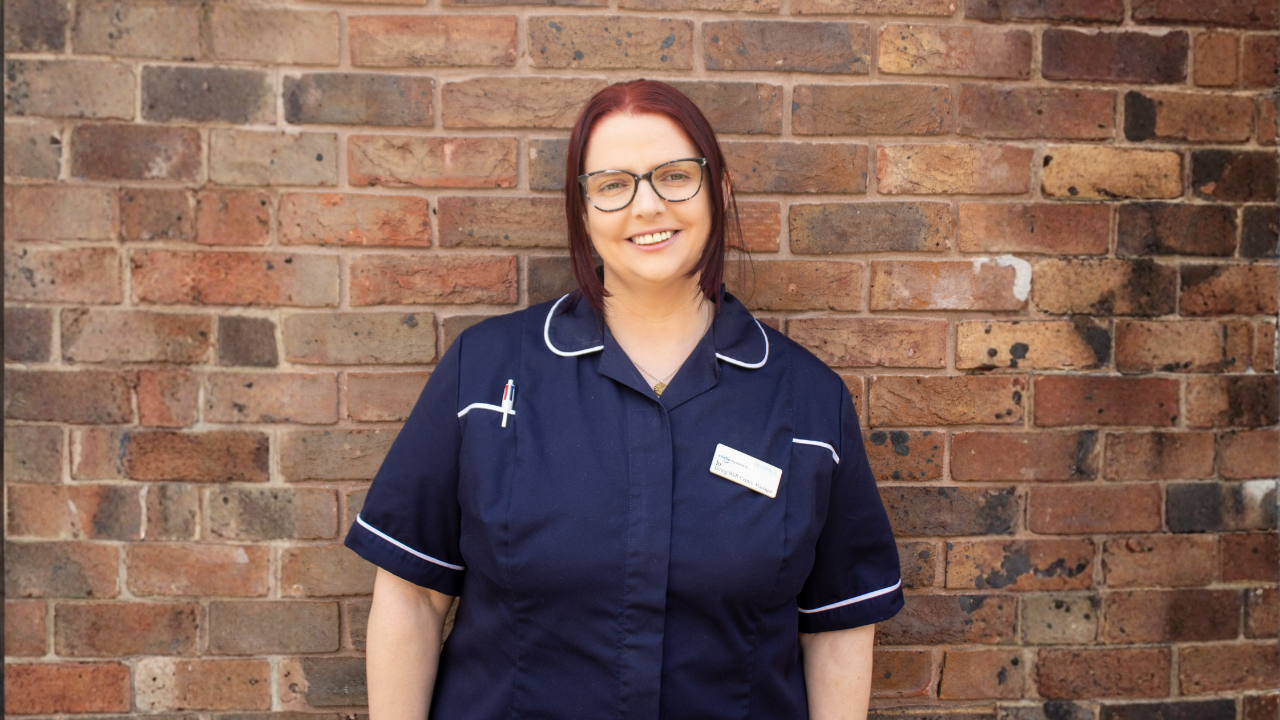
“Some of our patients say that coming in to be with us is literally what keeps them going,” says Living Well Centre Manager Jo Barrett.
Conditions such as Motor Neurone Disease, Interstitial Lung Disease, Idiopathic Pulmonary Fibrosis, Huntington’s Disease, Parkinsons and Progressive Supranuclear Palsy can be very difficult to manage. “If not for our skills and facilities some patients might never be able leave their homes, have a shower or have the opportunity to meet and talk to others in a social setting,” said Jo. “That’s how much of an impact we can have.”
“We are one of the few places that can care for patients with a dual diagnosis such as cancer with dementia or Parkinsons with dementia.”
Jo highlighted how the Living Well Centre can be life-changing for those who depend on oxygen. “Patients that depend on a constant supply of oxygen because of their conditions are all too often confined to their own homes with few if any opportunities to go out but because we can provide oxygen here, it means that patients can also come in and spend time with us enjoying activities, therapies and the company and encouragement of others. “For many, the Living Well day is the only day in the week where they can leave their homes. That is literally life-changing for these patients, and for their carers. They are genuinely excited when they come for their weekly visits. They know that by the end of the day, they will feel good and be looked after in a safe and supportive environment.”
Patients are offered a block of between six and twelve sessions and can have more than one block, depending on needs and circumstances. If they are too unwell to come in, they are offered telephone support.
It’s not just oxygen that the Living Well team can organise for patients. “Complex needs often require complex solutions: we make sure that we have everything in place to ensure that every patient need is met.” That includes technology to help patients breathe, specialist hoists, syringe drivers, facilities for transfusions and infusions, and specialist support for those who depend on PEG tubes for feeding.
“We are all about holistic symptom management,” Jo continued.” Living Well is a nurse-led service but we liaise with GPs, community nurses, occupational health professionals, specialist therapists and various relevant charities such as the MND Association that might be able to offer additional support. “We also arrange speakers to come in to offer advice around various subjects such as ensuring patients are applying for any benefits they are entitled to.”
The experience of the Living Well nursing team in dealing with such complex cases is second to none and extends far beyond providing expert nursing care. Jo explains: “We are trained in advanced communication and that enables us to start and develop conversations about serious illness that our patients and families might otherwise find too difficult.
“We take time to gently explore what matters most to each person, listening carefully to understand their wishes, their boundaries and the conversations they feel ready for. From there we support them at their own pace as we discuss aspects of planning for the future, ensuring every step honours their individuality, comfort and wellbeing.”
She continued: “We’ll talk about things like wills, power of attorney, funeral arrangements and even their digital legacy in terms of passwords for banking, subscriptions and so forth. There is nothing we won’t discuss with them if they want to. “We can become the family that some patients may not have at home and they know there’s absolutely nothing that they can’t discuss with us or ask us. Often, they talk to us about things that they don’t want to burden their loved ones with. We become that outlet.”
Jo admits that the work can be physically and emotionally challenging: “It’s a privilege to do what we do as a team, we do get to know our patients well and we follow their journey, which at times can have a profound effect. “We have regular clinical supervision, education and training and we have the support of the wider team. We all feel so fortunate to be able to do what we do for others in this remarkable environment and we never forget that it’s only thanks to the generosity of our supporters that the Living Well Centre can continue to do what it does and make such an impact.”